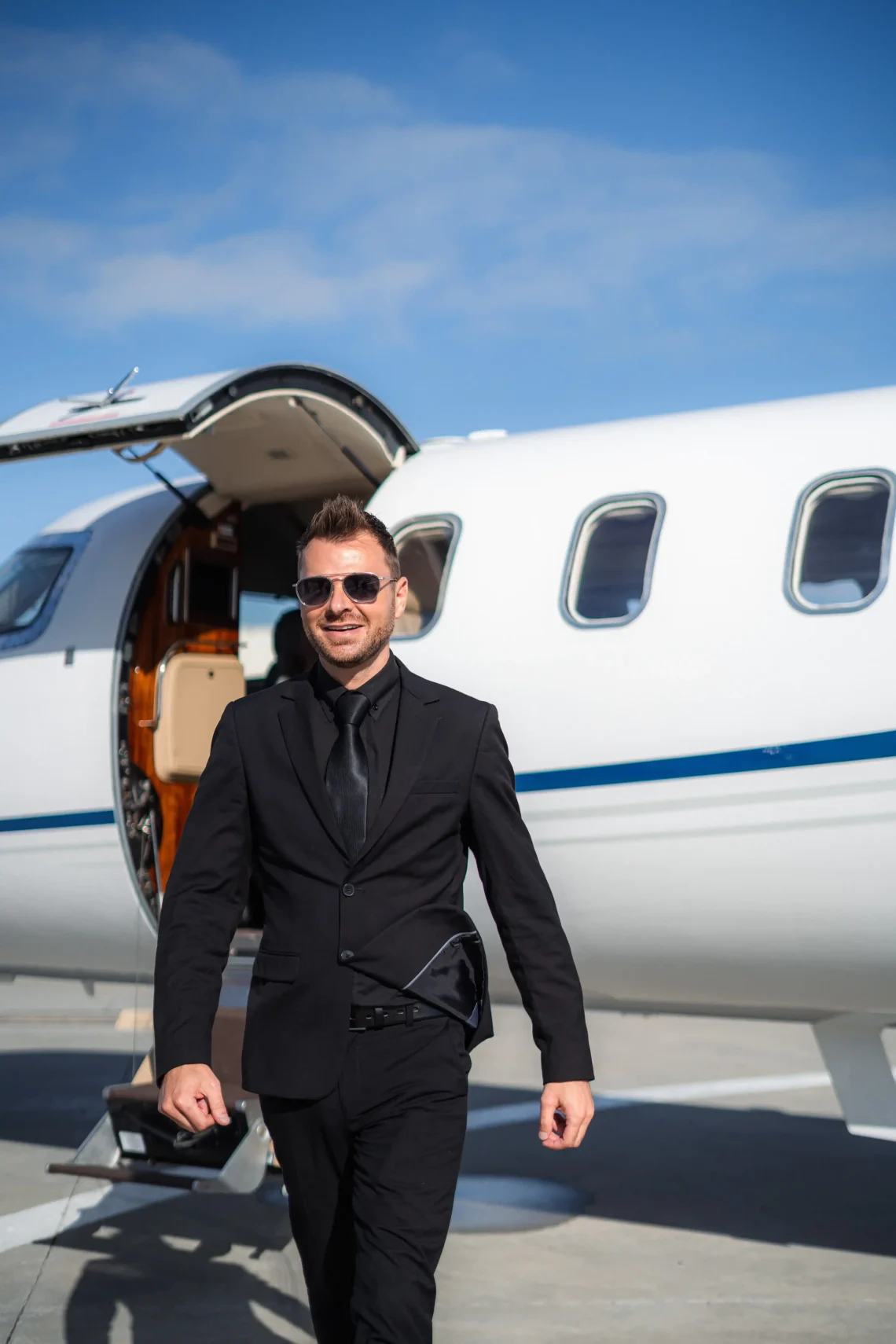
For billionaires, traveling around the world is rarely just about reaching a destination. It is about controlling their time, protecting their privacy, and enjoying a level of comfort that commercial airlines, even in first class, cannot always provide. While most travelers plan their journeys around airline schedules, connecting flights, airport queues, and boarding times, the world’s wealthiest individuals have access to a different kind of travel experience: private aviation.
Private jets have become one of the most recognizable symbols of billionaire lifestyles. From long-range aircraft capable of crossing oceans to customized cabins that resemble luxury apartments in the sky, these planes offer an extraordinary combination of convenience, technology, and exclusivity. For business leaders, investors, celebrities, and entrepreneurs, flying privately can also be a practical way to manage demanding international schedules.
But how do billionaires actually travel around the world in private jets? Do they own their aircraft, hire charter companies, or use shared aviation services? And what makes these expensive flying machines worth the investment? Behind the glamorous photographs and impressive aircraft designs is an entire industry built around making global travel more flexible, comfortable, and personalized.
Why Billionaires Choose Private Jet Travel Over First Class
First-class airline travel offers spacious seats, premium dining, airport lounges, and attentive service. However, even the most expensive commercial ticket cannot provide the same flexibility as a private aircraft. Passengers must still follow airline schedules, travel through busy terminals, and arrive according to airport procedures.
Private aviation changes the experience by allowing travelers to arrange flights around their own schedules. Instead of selecting a destination based on available commercial routes, passengers can request flights that better match their business commitments, family plans, or personal preferences. Depending on the aircraft, airport facilities, and regulations, private travelers may also use smaller airports closer to their final destinations.
For billionaires managing companies across several countries, this flexibility can be especially valuable. A business executive might attend a meeting in New York, travel to another city for an investment discussion, and continue to an international destination without spending unnecessary time waiting for connecting flights. What could become a complicated multi-day itinerary on commercial airlines may be organized more efficiently through private aviation.
Privacy is another major reason wealthy individuals choose private jets. High-profile entrepreneurs and public figures often attract attention wherever they go. A private aircraft provides a more controlled environment for conversations, work, rest, and family travel. It can also reduce exposure to crowded public spaces, although private aviation does not eliminate security procedures or regulatory requirements.
For the ultra-rich, the biggest luxury may not be champagne or designer interiors. It is having greater control over when, where, and how they travel.
Inside the Luxury Private Jets Used by the World’s Wealthiest Travelers
Not all private jets are the same. Aircraft vary considerably in size, passenger capacity, range, cabin design, and operating costs. Billionaires who travel internationally often favor large-cabin, ultra-long-range business jets because they can accommodate longer flights while providing more room for passengers and crew.
Models such as the Gulfstream G650ER, Gulfstream G700, and Bombardier Global 7500 are recognized names in the world of high-end business aviation. These aircraft are designed for long-distance travel and can feature separate areas for working, dining, relaxing, and sleeping.
The Bombardier Global 7500, for example, is known for its spacious multi-zone cabin. Its layout can provide distinct spaces for passengers to conduct meetings, enjoy meals, rest, or sleep during extended journeys. Rather than sitting in one conventional aircraft cabin for hours, travelers can move between different areas depending on their needs.
The Gulfstream G700 also represents the latest generation of ultra-long-range private aviation. Its cabin can be configured with multiple living areas, advanced lighting, and sophisticated passenger amenities. Depending on the owner’s specifications, a private jet can include custom seating, private bedrooms, entertainment systems, and dedicated spaces for business activities.
These interiors are not simply designed to look expensive. They are intended to make long journeys more comfortable and productive. For someone who regularly travels between continents, having a quiet place to sleep or work can make a significant difference.
Private Jet Ownership: How Billionaires Manage Their Aircraft
Owning a private jet involves far more than purchasing an aircraft. The owner must consider pilot salaries, maintenance, insurance, fuel, hangar space, inspections, training, and aircraft management. These expenses can add up to millions of dollars over time, depending on the aircraft and how frequently it flies.
Some billionaires choose full ownership because it gives them greater control over the aircraft’s availability, configuration, and management. They may also establish a dedicated flight department or hire an aviation management company to coordinate operations.
Others prefer to use a combination of ownership and charter services. This approach allows them to have access to an aircraft when needed without necessarily maintaining a large private fleet. The best arrangement depends on travel frequency, destinations, business requirements, and personal preferences.
A 2025 Forbes survey of billionaires found that a private jet was the most frequently named essential luxury among the respondents. Twelve of the 40 billionaires surveyed selected private aircraft as the luxury they could not live without. Although the survey was relatively small, the result illustrates how important private aviation can become for people whose professional and personal lives involve frequent travel.
The attraction is not always about showing off wealth. For some owners, a private aircraft functions as a business tool, helping them move between offices, meetings, investments, and international operations.
Fractional Ownership: Flying Privately Without Buying an Entire Jet
Not every wealthy traveler wants to purchase an entire aircraft. Fractional jet ownership offers another way to access private aviation by allowing several customers to share ownership of an aircraft or a fleet.
Under this arrangement, customers purchase a portion of an aircraft and receive access to a certain number of flight hours or travel privileges, depending on their agreement. The operator typically handles major responsibilities such as maintenance, scheduling, crew management, and operational support.
Companies such as NetJets have helped establish fractional ownership as an important part of the private aviation market. Instead of taking on every expense associated with full ownership, customers pay for a share of access while benefiting from a professionally managed service.
This model can appeal to business leaders and high-net-worth individuals who fly regularly but do not necessarily need an aircraft dedicated exclusively to them. It also provides flexibility because customers may have access to different aircraft categories depending on their travel requirements and program terms.
According to McKinsey’s 2026 analysis of business aviation, fractional aviation accounted for 20 percent of total business aviation flight hours in 2025, up from 14 percent in 2019. This growth highlights how private aviation is evolving beyond traditional full ownership.
For billionaires and other wealthy travelers, fractional ownership offers a practical alternative: access to private aircraft without having to manage every detail of owning one.
Private Jet Charter: The Flexible Way to Travel Around the World
Chartering a private jet is another option for individuals who want the benefits of private aviation without purchasing an aircraft or committing to a long-term ownership arrangement.
With charter services, passengers arrange a flight for a specific journey. They can select an aircraft based on the number of travelers, distance, luggage requirements, and preferred level of comfort. A smaller jet may be suitable for a regional business trip, while a large-cabin aircraft may be more appropriate for an international journey.
Chartering can also be useful when travel schedules change frequently. Rather than maintaining an aircraft throughout the year, a traveler can arrange flights when needed. Some aviation companies offer membership programs, jet cards, or subscription-style services that provide access to aircraft under specific conditions.
For people who travel to multiple destinations, this flexibility can be particularly attractive. They may use a long-range jet for an international journey and a smaller aircraft for a shorter regional trip. The aircraft can be selected according to the requirements of each itinerary.
However, private jet charter is not automatically inexpensive. Prices depend on aircraft type, flight distance, availability, crew requirements, airport charges, and other operational factors. Additional costs may also apply when an aircraft needs to reposition before or after a journey.
The advantage is convenience and access rather than guaranteed savings. For travelers who place a high value on time and flexibility, that distinction can make private charter worthwhile.
Billionaires Who Have Made Private Jets Part of Their Lifestyle
Some of the world’s best-known billionaires have become closely associated with private aviation. Jeff Bezos, for example, has been reported to own Gulfstream aircraft, including a Gulfstream G700 delivered in 2024. The G700 is among the latest ultra-long-range business jets, designed to provide a spacious cabin and advanced passenger comfort.
Kim Kardashian has also attracted attention for her highly customized Gulfstream G650ER. Reports in 2022 described the aircraft’s extensive interior renovation, which included luxury materials and a distinctive cashmere-inspired design. The project demonstrated how some wealthy owners treat their aircraft as personalized spaces rather than standard transportation.
Other billionaires have access to private aviation through corporate aircraft, fractional ownership, or charter arrangements. It is important to distinguish between personal ownership and simply using a private jet. An aircraft may be operated by a company, managed by a third party, or chartered for a particular journey, so public flight information does not always establish who owns or pays for it.
Nevertheless, the connection between billionaire lifestyles and private aviation remains strong. For individuals with international business interests, global investments, and demanding schedules, private aircraft can provide a level of mobility that is difficult to replicate through commercial travel.
What Happens During a Long-Distance Private Jet Journey?
A long-distance private jet journey can feel very different from a typical international flight. The experience begins before passengers board, with a flight team coordinating schedules, airport arrangements, passenger requirements, and aircraft preparation.
At the airport, private travelers generally use a fixed-base operator, commonly known as an FBO. These facilities provide services for private and business aircraft, including passenger lounges, ground handling, fueling, and other operational support. Depending on the airport and departure arrangements, passengers may be able to avoid some of the crowded terminal experience associated with commercial aviation.
Once onboard, the cabin is arranged according to the passengers’ preferences and the aircraft’s configuration. Meals can be prepared or arranged in advance, while seating areas can be used for work, relaxation, or conversation. On larger jets, passengers may have access to sleeping arrangements that make overnight journeys more comfortable.
Cabin connectivity is also important. Many modern business jets offer internet access, allowing passengers to communicate with colleagues, review documents, and manage business activities while traveling. The quality and availability of connectivity depend on the aircraft’s equipment, service provider, and route.
For ultra-long-range journeys, flight planning is particularly important. Pilots and operators must consider weather, fuel requirements, aircraft performance, airspace restrictions, and operational regulations. Some routes may be completed nonstop, while others require a technical stop depending on the aircraft and conditions.
The result is a travel experience designed around the passenger’s schedule, rather than a fixed commercial airline timetable.
The Hidden Costs of the Billionaire Private Jet Lifestyle
Although private jets are associated with extraordinary luxury, operating them requires significant financial and logistical resources. The purchase price is only one part of the total cost.
Owners must account for regular maintenance, engine inspections, pilot and crew compensation, insurance, fuel, hangar fees, airport charges, and interior upgrades. Larger aircraft generally require more resources to operate, and international flights can introduce additional costs involving permits, handling, and regulatory requirements.
There is also depreciation. Like other expensive assets, private aircraft can lose value over time, although resale prices depend on market demand, aircraft condition, age, maintenance history, and equipment.
For this reason, wealthy travelers often work with specialized aviation advisers and management companies. These professionals help coordinate operations, evaluate aircraft options, manage maintenance schedules, and oversee the complex requirements of international flying.
A private jet may look like the ultimate symbol of freedom, but keeping one ready for travel requires an extensive team working behind the scenes.
The Environmental Debate Surrounding Private Jet Travel
The luxury of private aviation also comes with environmental questions. Private jets generally carry fewer passengers than commercial airliners, which means their emissions per passenger can be substantially higher, particularly when aircraft operate with only a few people onboard.
The environmental impact has become a major part of the conversation surrounding billionaire lifestyles. Critics argue that private aviation allows a small number of extremely wealthy travelers to produce disproportionately high emissions for journeys that may sometimes be completed using commercial flights or ground transportation.
Research published in Communications Earth & Environment has also examined the growing use of private jets for relatively short journeys. The findings have contributed to public discussions about whether some private flights are necessary and how the industry can reduce its environmental footprint.
The aviation industry is exploring options such as sustainable aviation fuel, more efficient aircraft designs, improved flight planning, and operational changes that may help reduce emissions. However, sustainable aviation fuel remains limited in availability and does not make private flying impact-free.
For wealthy travelers, the challenge is balancing convenience with responsibility. As public expectations around sustainability continue to develop, the environmental impact of luxury travel is likely to remain an important issue.
Why Private Aviation Continues to Define Luxury Travel
Private aviation continues to attract billionaires because it offers something that money alone cannot always guarantee through traditional travel: greater control over time. It allows passengers to arrange journeys around their own commitments, enjoy private cabin environments, and access destinations with more flexible routing options.
The experience is supported by an entire network of pilots, cabin crews, aviation managers, charter operators, maintenance specialists, and airport service providers. What appears to be a simple private flight is actually the result of careful planning and coordination.
For some travelers, full ownership makes sense. Others choose fractional programs or charter services because they offer access without the responsibilities of maintaining an aircraft. There is no single approach that suits everyone, but each option demonstrates how the private aviation industry has expanded to serve different levels of demand.
The appeal of private jets also reflects a broader definition of luxury. Comfort, privacy, personalization, and convenience have become just as important as expensive materials and impressive price tags. The same desire for personal well-being and self-care can be seen in other lifestyle choices, from premium travel experiences to routines that support confidence and personal appearance. Readers interested in hair wellness and personal care can explore the Ragers hair regrowth collection.
Frequently Asked Questions About Billionaires and Private Jet Travel
Why do billionaires travel by private jet?
Billionaires often use private jets because they offer flexible schedules, greater privacy, direct routing options, and comfortable cabins. For business leaders who travel frequently, private aviation can also make it easier to attend meetings in multiple locations within a limited amount of time.
Which private jets are popular among billionaires?
Some well-known ultra-long-range business jets include the Gulfstream G650ER, Gulfstream G700, and Bombardier Global 7500. These aircraft are recognized for their long-distance capabilities, spacious cabins, and premium passenger amenities.
Do all billionaires own their private jets?
No. Some purchase their own aircraft, while others use fractional ownership, jet cards, membership programs, or private charter services. The best option depends on how frequently they travel and how much control they want over aircraft access.
How much does it cost to own a private jet?
The cost varies widely depending on the aircraft’s size, age, range, and equipment. Beyond the purchase price, owners must pay for fuel, maintenance, insurance, crew salaries, hangar space, and management services. Operating a large private jet can cost millions of dollars annually.
Can a private jet fly around the world without stopping?
Some ultra-long-range business jets can travel thousands of nautical miles without refueling, but no aircraft can complete every global route nonstop. Flight distance, weather, passenger load, fuel requirements, and operational restrictions determine whether a stop is necessary.
Is private jet travel more comfortable than first class?
Private jets can offer more personalized cabin arrangements, flexible departure times, and greater privacy than commercial first class. However, the experience depends on the aircraft, its configuration, and the services provided.
Final Thoughts: A Different Way to Experience the World
For billionaires, private jet travel represents much more than an expensive way to fly. It is a lifestyle built around flexibility, privacy, and control. Whether through full aircraft ownership, fractional programs, or private charter services, the world’s wealthiest travelers have access to a global aviation network designed to make international journeys more convenient.
From custom-designed cabins and long-range aircraft to dedicated flight crews and personalized itineraries, private aviation demonstrates how far luxury travel can go. Yet the industry also faces important questions about operating costs, accessibility, and environmental responsibility.
Ultimately, the greatest appeal of a private jet may be the ability to make travel fit around life rather than forcing life to fit around a flight schedule. For those who can afford it, that freedom is one of the most exclusive luxuries in the world.