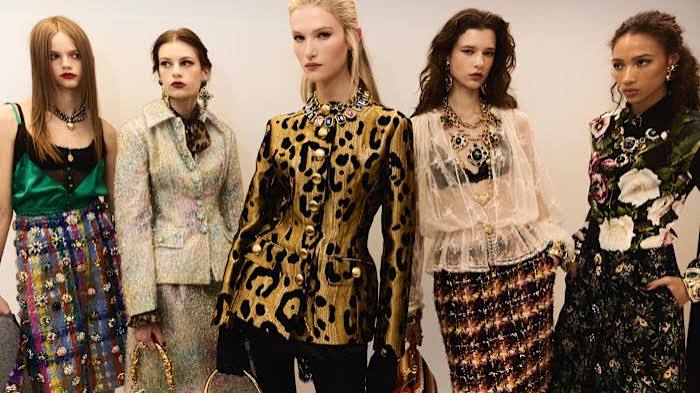
Milan Fashion Week has always been about clothing, but the modern fashion week is increasingly selling something much larger. The September 2026 edition has turned Milan into a meeting point for luxury fashion, celebrity culture, entertainment, tourism, craftsmanship and digital attention, creating an event where what happens outside the runway can be nearly as important as what happens on it.
From September 22 through September 28, designers are presenting their Spring/Summer 2027 collections across the Italian fashion capital, with major houses including Prada, Fendi, Gucci, Dolce & Gabbana, Bottega Veneta and Giorgio Armani occupying the calendar. But the fashion week experience extends far beyond the collections themselves. Celebrity front rows, street-style photography, after-parties, cultural exhibitions and Vogue World: Milano have transformed the city into a global luxury stage.
That transformation matters because luxury fashion is no longer competing only for the attention of people who purchase designer clothing. It is competing for cultural relevance.
A runway collection may last only a few minutes, but the images generated around it can circulate for days. A celebrity arriving at a show can become a news story. A particularly memorable outfit can become a social-media reference. A designer’s new direction can trigger analysis across fashion publications, while street-style photographs can introduce individual pieces to audiences who may never watch the actual runway presentation.
Milan has become particularly effective at combining these elements.
This season’s celebrity presence demonstrates the scale of that evolution. Cardi B appeared on the Vogue World: Milano runway wearing Versace, while Jennifer Lopez, Alicia Keys, Simone Ashley, J Balvin and other recognizable figures also participated in the event. Vogue World itself was designed around Italian craftsmanship and the relationship between traditional fashion and the technological future, making it more than a conventional runway presentation.
The choice of celebrities is not incidental.
Fashion houses understand that a celebrity can bring an audience to a collection that might otherwise be seen primarily by industry professionals. An actor, musician or athlete can translate a designer’s work into another cultural language. The clothing becomes connected to entertainment, music, sport or popular culture, expanding the number of people who encounter the brand.
Cardi B’s Vogue World appearance illustrates that perfectly. Her Versace look referenced the house’s Spring 2018 collection through a dress incorporating reproductions of past Vogue covers, while gold and diamond Tiffany & Co. bone cuffs completed the look. The outfit was simultaneously a fashion statement, a celebrity moment and a piece of fashion history.
That combination is increasingly valuable.
Luxury fashion has always depended on storytelling. A designer does not simply sell a handbag or a coat. The product is presented as part of a world: a particular idea of taste, craftsmanship, heritage, aspiration or modernity. Celebrity participation provides another layer to that world because audiences already understand celebrities as cultural symbols.
The result is a form of luxury marketing that does not always feel like marketing.
A celebrity arrives at a show wearing the brand.
Photographers document the outfit.
Fashion publications publish the images.
Fans share them.
Social-media creators discuss the styling.
The brand receives another round of exposure.
The runway collection becomes part of a much larger conversation.
Katie Holmes offered another example during this Milan Fashion Week. The actor and director attended the Tod’s Spring/Summer 2027 show with Jason Bard Yarmosky, wearing a cream trench coat over a white knit T-shirt, oat-colored wide-leg trousers and black square-toed loafers. She also carried a personalized Tod’s T Signature handbag.
The significance of an appearance like Holmes’s is not simply that a celebrity was sitting in the front row.
The celebrity becomes part of the brand’s visual language.
Holmes’s relatively understated styling fits naturally into the vocabulary of an Italian luxury house associated with leather goods, craftsmanship and sophisticated everyday dressing. The clothes are not being presented in isolation. They are being demonstrated through a recognizable person in a real-world environment.
That distinction is important for luxury brands.
Consumers increasingly want to understand how expensive fashion actually fits into life. A runway can show the idealized version. Street style shows the wearable version. Celebrity appearances connect the two.
This is why the streets around Milan’s fashion venues have become an important part of the fashion week spectacle.
British Vogue’s coverage of the September 2026 street-style scene described the city as particularly energized this season, with Vogue World bringing designers and models together at the Galleria Vittorio Emanuele II while major shows, exhibitions and events continued throughout Milan.
Street style has effectively become a second runway.
Photographers capture editors, buyers, influencers, celebrities, designers and fashion enthusiasts moving between shows. Their clothing is often carefully selected, but the environment feels less controlled than an official runway. That creates another form of fashion storytelling.
A runway says: this is what the designer wants you to see.
Street style says: this is how the fashion is being interpreted.
Both have become commercially valuable.
For luxury houses, this creates an enormous amount of visual material. One collection can generate runway photographs, backstage images, front-row photographs, celebrity arrivals, street-style galleries, social-media clips and after-party coverage.
The collection becomes content.
And content has become one of luxury fashion’s most important currencies.
That does not mean the clothes themselves have become less important. In fact, the opposite may be true. The more crowded the digital environment becomes, the more pressure there is on designers to create something visually distinctive enough to travel beyond the runway.
Prada’s Spring/Summer 2027 collection provides an interesting example. Miuccia Prada and Raf Simons presented a collection built entirely around skirts, with the designers deliberately eliminating trousers and dresses from the lineup. The collection explored the skirt as a versatile and expressive garment rather than treating it simply as a conventional feminine wardrobe category.
That kind of clear design idea is particularly useful in today’s media environment.
It gives editors something to describe.
It gives photographers a recognizable visual identity.
It gives social-media users something to debate.
And it gives consumers a clear idea of what makes the collection different.
Fashion has always needed a point of view. Digital culture has simply increased the speed at which that point of view has to communicate.
Milan’s current fashion landscape is also undergoing broader changes. Several major Italian houses are navigating leadership transitions, changing creative directions and evolving relationships with the traditional structures of the luxury industry. Reuters reported that the luxury sector is dealing with weaker consumer spending and financial pressure, increasing the importance of major fashion shows as visibility-generating events.
That puts additional pressure on Fashion Week.
A runway show is expensive.
A major luxury presentation can involve elaborate sets, celebrity guests, production crews, hospitality, travel, stores and extensive marketing activity. Reuters reported that some brands are spending millions of euros on shows and related experiences as they attempt to justify luxury prices and maintain consumer interest in a challenging market.
The fashion show therefore has to accomplish several things simultaneously.
It has to communicate the designer’s creative direction.
It has to impress buyers and editors.
It has to generate press coverage.
It has to produce images that travel online.
It has to strengthen the brand.
And increasingly, it has to create an experience people remember.
Vogue World: Milano was designed precisely around that concept.
Held at the Galleria Vittorio Emanuele II, the event connected Italian fashion history with contemporary entertainment and celebrity culture. The show incorporated musicians, actors, athletes and models while emphasizing Italian craftsmanship and what Vogue described as the “human touch” during an era of expanding technology.
The choice of location was significant as well.
The Galleria is not simply a venue. It is one of Milan’s most recognizable architectural and commercial landmarks, meaning the fashion event became inseparable from the city itself.
That is another way Milan Fashion Week is selling more than clothes.
It is selling Milan.
The city becomes part of the luxury experience.
Visitors attend shows, restaurants become gathering places, hotels become temporary headquarters for fashion teams, boutiques host events and galleries participate in the cultural program. Fashion Week generates an atmosphere that extends beyond the official schedule.
For international audiences watching remotely, that atmosphere is recreated through photographs, livestreams, celebrity arrivals and social media.
The physical city becomes a digital spectacle.
This is particularly important because fashion audiences have changed. A person following Milan Fashion Week online may not be a buyer, editor or fashion student. They may simply be interested in celebrity culture, street style, handbags, beauty or luxury travel.
Fashion Week has learned to speak to all of those audiences simultaneously.
That helps explain why celebrity attendance has become so central.
The front row is now a form of programming.
A photograph of a celebrity at Prada can be consumed independently of the collection.
A photograph of Katie Holmes at Tod’s can become a styling reference.
Cardi B walking the Vogue World runway can become a music-and-fashion story.
Jennifer Lopez appearing in Dolce & Gabbana can become a celebrity-fashion headline.
The event is no longer one story.
It is hundreds of stories generated from the same physical location.
That is an extraordinary transformation for an industry traditionally associated with exclusivity.
Luxury fashion still relies on scarcity, but Fashion Week itself has become highly shareable.
The runway may remain invitation-only, yet millions of people can see photographs from it almost immediately.
The front row may be reserved for industry figures and selected guests, yet the images become global entertainment.
The clothes may be produced in limited quantities, yet the cultural conversation around them can reach enormous audiences.
Exclusivity and accessibility now exist side by side.
That tension may actually be part of the appeal.
Luxury brands want consumers to feel that they are entering a special world, but they also need people outside that world to aspire to it. Celebrity culture helps create that bridge.
A consumer may never purchase a €5,000 handbag.
But they may recognize the bag because they saw it on a celebrity in Milan.
They may save a photograph.
They may search for the brand.
They may discover a less expensive accessory.
They may follow the designer.
They may eventually become a customer.
Luxury fashion therefore benefits from attention even when attention does not immediately become a sale.
The value is cumulative.
This is particularly important during an economic period when consumers are becoming more selective. Reuters noted that middle-class spending on luxury has weakened while consumers are increasingly directing money toward experiences, wellness and other forms of discretionary spending.
Brands consequently have to give people more reasons to care.
A handbag by itself may not be enough.
A handbag attached to a celebrity appearance, a Milan event, an iconic building, a runway collection, a cultural story and a highly photographed moment becomes something else.
It becomes part of an experience.
That may be the real product Fashion Week is selling.
Not just clothes.
Not just accessories.
Not even just luxury.
It is selling participation in a cultural moment.
The consumer gets to feel connected to Milan, to the designers, to the celebrities, to the imagery and to the conversation.
That is why a fashion week can remain relevant even to people who will never attend one.
The event becomes something to watch.
And Milan currently has plenty to watch.
Prada’s skirt-focused collection has generated discussion around a single garment category. Gucci and Moschino have explored questions of Italian identity and “real people” within their presentations. Vogue World has turned a historic Milan location into a hybrid runway and entertainment event. Celebrity arrivals continue generating their own coverage, while street-style photographers document another layer of fashion happening outside the shows.
Together, these elements demonstrate how far Fashion Week has moved beyond the traditional runway model.
The runway remains the foundation.
But around it sits an entire ecosystem.
There is celebrity.
There is tourism.
There is entertainment.
There is digital media.
There is luxury retail.
There is cultural programming.
There is photography.
There is social media.
And there is the city itself.
Milan Fashion Week succeeds because all of these elements reinforce one another.
A designer creates the collection.
The celebrity creates recognition.
The photographer creates the image.
The publication creates the story.
The social platform creates the conversation.
The city creates the setting.
And the consumer watches all of it unfold.
That is why Milan’s September fashion week feels less like a trade event and more like a global cultural festival.
Fashion is still at the center, but it no longer operates alone.
The most successful luxury brands understand that the modern consumer is buying into a world before they buy into a product. They want craftsmanship, but they also want meaning. They want quality, but they also want identity. They want something beautiful, but they increasingly want to know what the brand represents.
Milan provides the perfect stage for that story because the city itself carries centuries of design, architecture, art, commerce and craftsmanship.
The clothing is important.
The atmosphere is important.
The people are important.
The images are important.
The conversation is important.
And in 2026, the combination may be more valuable than any single runway look.
Milan Fashion Week is therefore selling more than clothes because luxury fashion itself has become more than clothing.
It is selling access to a lifestyle, an aesthetic, a cultural identity and a particular vision of what luxury can look like in a rapidly changing world.
The September 2026 shows make that especially clear. Celebrities are not simply watching fashion. They are helping turn it into entertainment. Designers are not simply presenting collections. They are building narratives. Cities are not simply hosting shows. They are becoming part of the product.
And audiences are not simply looking at clothes.
They are buying into the story around them.
That may be the most important luxury trend coming out of Milan this season.
The future of fashion will not be defined only by what appears on the runway.
It will also be defined by everything that happens around it.
References
- Vogue — Milan Fashion Week Spring/Summer 2027 Cheat Sheet
- Vogue — See Every Celebrity Cameo From Vogue World 2026: Milano
- Vogue — Cardi B Is Fit to Print at Vogue World 2026: Milano
- Vogue — Katie Holmes and Jason Bard Yarmosky Make a Date of Milan Fashion Week
- British Vogue — The Best Street Style From Milan Fashion Week SS27
- British Vogue — All the Stars on the Front Row at Milan Fashion Week
- Reuters — The Show Must Go On: Struggling Luxury Brands Seek Catwalk Boost in Milan and Paris
- The Guardian — Skirts Take Star Billing as Prada Eschews Trousers and Dresses in Milan
- Vanity Fair — The Two Faces of Milan: Gucci and Moschino Bring “Real People” to Milan Fashion Week
- HauteLedger.com
:::