New York Fashion Week has officially handed the fashion baton to London, and the Spring/Summer 2027 collections have already made one thing clear: the next fashion season is not interested in being quiet. After years of minimalist dressing, subdued palettes and the seemingly endless pursuit of looking effortlessly polished, New York’s latest collections brought back movement, color, texture and clothes that actually want to be noticed. The message was less about following one universal trend and more about embracing a wardrobe with personality.
That energy was visible across the official Spring/Summer 2027 schedule, which featured 126 activations including runway shows, presentations, digital events and New York Menswear Day shows. The calendar brought together established houses, returning labels and emerging designers, giving New York’s fashion scene a particularly broad creative range this season.
If there was one word that repeatedly surfaced around the New York collections, it was joy. Vogue’s review of the season described designers approaching the Spring/Summer 2027 collections with a renewed sense of optimism and playfulness. Tory Burch used colorful textures and patterns, while Altuzarra looked toward ideas of freedom and color. Other designers drew inspiration from personal memories, travel and earlier eras, resulting in collections that felt more expressive rather than strictly trend-driven.
That shift matters because fashion trends are rarely just about individual garments anymore. They are about mood. The strongest pieces coming out of New York suggest that consumers will have permission to dress more dramatically next spring and summer without necessarily abandoning practicality. A colorful sweater, an oversized bag, a statement skirt, a pair of architectural shoes or an unexpected print can transform an otherwise simple wardrobe.
Color, in particular, is refusing to disappear.
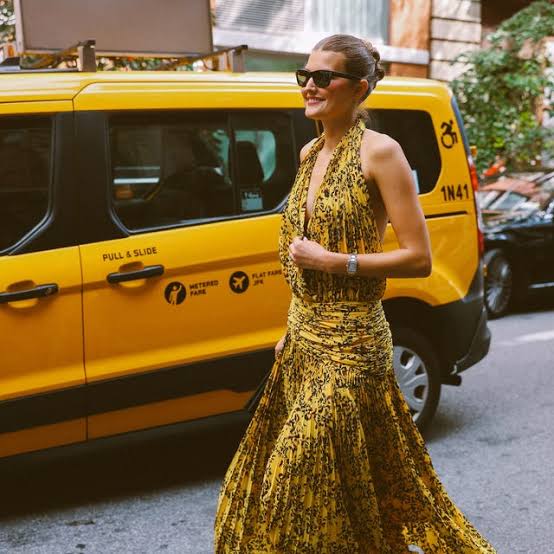
Street style during NYFW reinforced the appetite for brighter dressing. POPSUGAR identified pops of color, vibrant color combinations, sequins, patchwork prints, statement skirts and oversized totes among the season’s most visible street-style trends. The significance is not necessarily that everyone will suddenly wear head-to-toe neon. Instead, color is becoming a styling tool again. A bright sweater tied around the waist, a colorful handbag, a vivid shoe or one saturated piece against a neutral outfit can completely change the effect.
That makes statement color one of the easiest trends to translate outside the runway.
The same is true of movement. Spring and summer clothing has always benefited from fluid silhouettes, but the latest collections are approaching movement as part of the visual identity of an outfit. Skirts, loose trousers, flowing dresses and layered pieces create silhouettes that change as the wearer moves. Rather than constructing an outfit entirely around a rigid shape, designers are increasingly interested in what happens when fabric moves through space.
And then there are the details.
Sequins, embellishment, unusual proportions, dramatic accessories and unexpected combinations appeared throughout the fashion-week conversation. Statement dressing does not necessarily require an elaborate evening gown. Sometimes the most effective approach is one memorable detail attached to an otherwise uncomplicated look. A sculptural bag can become the focal point. A dramatic skirt can carry an entire outfit. A textured jacket can turn basic trousers into something editorial.
This is particularly relevant as fashion moves from runway fantasy into retail reality. The pieces that eventually influence everyday wardrobes are often not the most theatrical looks from a collection. They are the ideas that can be translated. A runway may present an exaggerated silhouette, while stores eventually offer a more wearable version of the same proportion. A dramatic color combination can become a handbag or knitwear trend. A complicated layered look can become a single statement piece.
That translation process is where New York’s Spring/Summer 2027 collections become especially interesting.
The city has always had a reputation for making fashion feel more connected to everyday life. There is a difference between admiring a runway look and imagining yourself wearing it to dinner, to work or on vacation. New York’s strongest trends this season seem designed to bridge that gap. They are expressive, but many can be introduced gradually.
Someone who is not ready for a fully colorful wardrobe can start with a bright accessory. Someone who does not want sequins from head to toe can introduce metallic details through shoes or a bag. Someone who prefers classic tailoring can experiment with a more relaxed silhouette. Fashion becomes less about buying an entirely new identity and more about adding one unexpected element.
Beauty followed a similar direction.
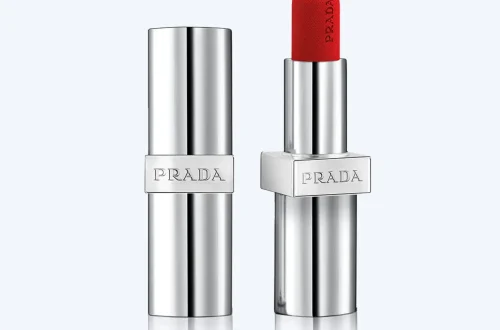
Vogue Beauty’s review of Spring/Summer 2027 NYFW highlighted three notable beauty directions: low ponytails in multiple interpretations, metallic touches across makeup and hair, and glossy “naked nails.” That combination is telling because it balances simplicity with shine. The hair can remain clean and uncomplicated while makeup or accessories provide the drama. The nails can look almost bare while still having a polished, high-gloss finish.
It is another example of the season’s larger contradiction: minimal effort does not necessarily mean minimal impact.
The fashion world is now moving into London, where Spring/Summer 2027 officially runs from September 17 through September 21. The British Fashion Council’s schedule includes established names alongside emerging designers, with traditional runway shows sharing space with more experiential formats.
London tends to bring a different kind of creative energy to Fashion Month. Where New York often plays with commercial wearability, London has a long history of pushing fashion toward experimentation, eccentricity and youth culture. This season’s schedule includes designers such as Chopova Lowena, Erdem, Ashley Williams, Natasha Zinko, Harris Reed, Knwls, Ahluwalia and Roksanda, alongside newer names such as Aaron Esh and Paolo Carzana.
That makes London particularly important for anyone watching what happens to the expressive mood that began in New York. Will bold color become more eccentric? Will statement details become more theatrical? Will designers push proportions even further? Or will London’s designers pull the season in an entirely different direction?
Then comes Milan.
By the time Fashion Month reaches Italy, the conversation will have expanded from New York’s energy and London’s experimentation to Milan’s relationship with craftsmanship, tailoring, luxury and Italian design heritage. Milan often has a different visual vocabulary, and the Spring/Summer 2027 collections will help determine which New York ideas become broader seasonal movements and which remain specifically tied to the American fashion scene.
Paris follows from September 28 through October 6, with 68 shows and 33 presentations currently scheduled for the women’s Spring/Summer 2027 ready-to-wear calendar. The schedule includes returns from Valentino, Maison Margiela, Sacai, Ester Manas, Christopher Esber and Casablanca, while Courrèges and Carven will introduce new creative leadership.
Paris is where the season’s visual conversation can become even more complicated. By then, buyers, editors and fashion audiences will have seen several weeks of collections and will have a much clearer sense of which ideas are appearing repeatedly across cities. A color that appears in New York and London may take on a completely different meaning in Paris. A silhouette introduced in one city may be reinterpreted through couture techniques or French tailoring. An accessory trend that seems playful in New York could become more refined in Paris.
That is why Fashion Month is best understood as one long conversation rather than four separate events.
New York starts the discussion. London challenges it. Milan refines or redirects it. Paris gives the season its final major statement.
Of course, the internet is also playing a much bigger role in determining which runway ideas actually become popular. Fashion shows are no longer experienced exclusively by editors and buyers sitting inside a venue. A runway look can appear on TikTok before the show has even finished. Street-style photographs can circulate within minutes. A celebrity sitting front row can become part of the story. A particular handbag or shoe can suddenly appear across social feeds because one image caught people’s attention.
That makes the relationship between runway fashion and everyday fashion increasingly immediate.
A collection does not have to wait for a magazine editorial months later to find an audience. The audience is already watching. It is screenshotting. It is saving looks. It is searching for similar pieces. It is recreating styling ideas. It is debating whether a trend will actually work in real life.
And that is ultimately what makes the Spring/Summer 2027 season so interesting.
The defining pieces may not be one specific dress, bag or shoe. They may be the pieces that give people permission to be more expressive again. Colorful separates. Statement skirts. Oversized totes. Unexpected prints. Sequins used outside traditional eveningwear. Sculptural accessories. Fluid silhouettes. Shiny beauty details. Clothes that move.
The common thread is personality.
Fashion does not appear to be abandoning practicality completely. Instead, practicality is becoming the foundation for more expressive styling. A simple wardrobe can still exist, but it can now have a dramatic accessory. A neutral outfit can carry a bright accent. A classic dress can be paired with an unexpected shoe. A polished beauty look can include metallic shine.
That makes the season easier to understand than a giant list of “must-have” trends. The real shift is toward individuality.
The fashion industry will continue moving through London, Milan and Paris, and each city will add another layer to the Spring/Summer 2027 story. By October, the season’s biggest ideas will be much clearer. Some will remain runway fantasies. Others will appear in department stores, social feeds and everyday wardrobes.
But New York has already made its contribution.
For Spring/Summer 2027, fashion is moving again. It is brighter, more playful, more detailed and more willing to take up space.
And after several seasons of trying to look effortlessly perfect, perhaps that is exactly what the next wardrobe needs.
References
- Vogue — New York Fashion Week’s Show-Stopping Season
- Vogue — New York Fashion Week Cheat Sheet: Spring/Summer 2027
- POPSUGAR — The Viral Street-Style Trends Our Editors Wore to Fashion Week
- Vogue Beauty — Spring 2027 NYFW Trend Report
- Vogue — London Fashion Week Cheat Sheet: Spring/Summer 2027
- Vogue — Paris Fashion Week Unveils Spring/Summer 2027 Schedule