Luxury shopping has traditionally been built around atmosphere, presentation, and personal service. From carefully designed boutiques to beautifully photographed online collections, the experience is meant to feel distinctive long before a customer makes a purchase.
Now, Prada is testing a new way to bring that experience into the digital world: a shopping experience through ChatGPT.
The initiative, developed with Accenture Song and supported by DaVinci Commerce, allows users to explore Prada collections, discover products, and find store information through conversations with AI. The pilot is available in the United States, United Kingdom, and Italy, according to reports published in late October and early November 2026.
Instead of navigating through multiple website categories, shoppers can describe what they are looking for in everyday language and use a conversation to explore the brand.
It is a relatively small step in the larger world of luxury retail, but it raises an interesting question: what happens when discovering a designer product becomes as simple as asking a question?
Luxury Shopping Is Entering a New Digital Era
Luxury brands have spent years developing online experiences that reflect the identity of their physical stores. Product photography, editorial campaigns, detailed descriptions, virtual appointments, and personalized recommendations have all helped make digital shopping feel more sophisticated.
But traditional e-commerce still requires shoppers to do much of the work themselves.
A customer searching for a designer handbag may need to browse several categories, apply filters, compare product descriptions, and open multiple pages before finding something that matches their preferences.
Conversational shopping introduces another possibility.
A shopper could ask for a Prada bag suitable for everyday use, request options in a particular color, or explore products from a specific collection. Rather than relying entirely on menus and search filters, the experience allows the customer to refine their preferences through follow-up questions.
This does not eliminate the traditional luxury website. Instead, it creates another way for customers to begin their shopping journey.
For a brand like Prada, the opportunity is to make product discovery more accessible while maintaining control over how its collections and identity are presented.
Why Prada’s ChatGPT Initiative Matters
Prada’s new experience is notable because it brings a luxury fashion house into a conversational environment that consumers increasingly use to research products and make decisions.
The pilot was developed with Accenture Song, with support from DaVinci Commerce. Its reported capabilities include exploring Prada collections, discovering products, and accessing store information through conversations grounded in the brand’s own sources.
That last detail matters.
Luxury brands invest heavily in the way their products are described and presented. The materials, craftsmanship, design inspiration, collection history, and brand identity all contribute to the perceived value of an item.
When shoppers use general AI tools to research products, information may come from different websites and third-party sources. A brand-supported experience offers an opportunity to provide information drawn from the company’s own material.
For Prada, this could help customers discover products while receiving information that reflects the brand’s intended presentation.
It also gives the company an opportunity to understand how shoppers naturally describe what they want. Customers may search for a particular bag by name, but they may also describe a lifestyle, occasion, color, material, or personal preference.
Those conversations can reveal different ways people think about luxury products.
The New Personal Shopper Could Be a Conversation
One of the most interesting possibilities of AI-powered shopping is the ability to make product discovery feel more personal.
Traditional online stores usually organize products according to categories such as handbags, shoes, clothing, and accessories. These structures are useful, but they do not always reflect the way people actually shop.
A customer may not begin with a product category. They may start with a situation.
They might need a versatile bag for work, a gift for someone who appreciates Italian design, or a pair of shoes that can transition from daytime plans to an evening event.
A conversational assistant can help translate those preferences into product searches.
For example, a shopper could ask for:
- A designer handbag that works for everyday use.
- A neutral accessory that complements a minimalist wardrobe.
- Shoes suitable for a formal event.
- A gift idea from a particular collection.
- Information about where a selected item can be found in person.
The shopper can then refine the request rather than restarting the search.
This creates a different kind of digital interaction. Instead of expecting customers to understand a website’s navigation system, the experience allows them to explain what they want in their own words.
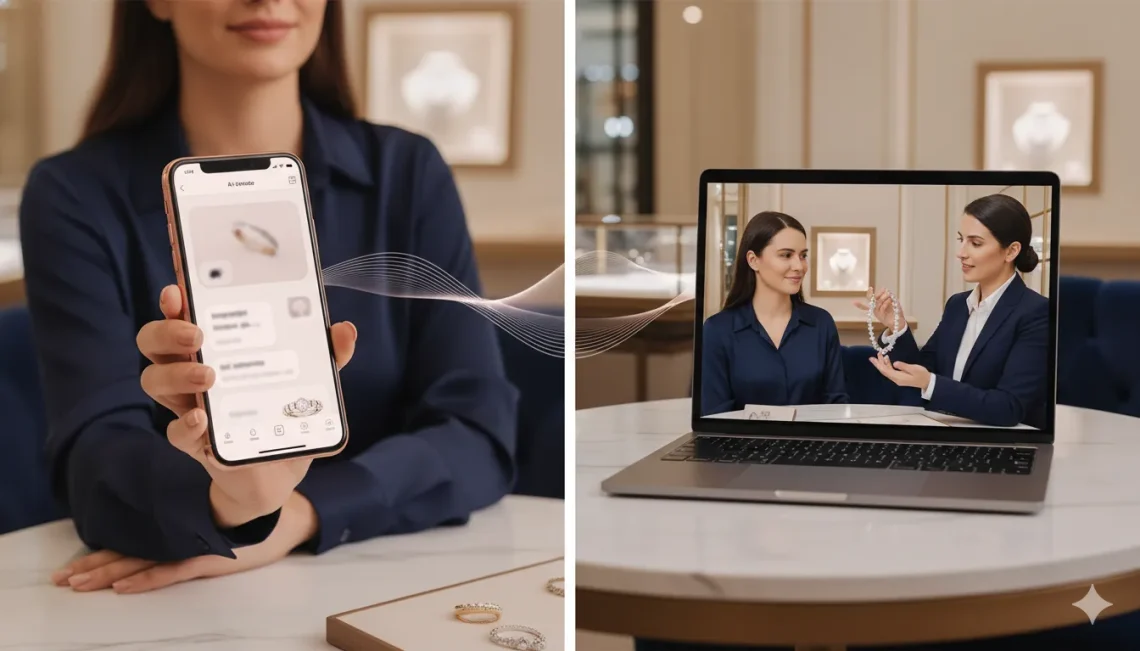
For luxury retail, that could make online discovery feel closer to having an initial conversation with a personal shopping assistant.
Customer Service Could Become More Accessible
Luxury customer service has traditionally emphasized individual attention. In physical stores, associates help customers understand collections, compare products, explore materials, and locate specific items.
Online shopping has made some of these interactions more difficult to reproduce.
Conversational AI could help bridge part of that gap by making basic product information easier to access.
Customers may be able to ask questions about collections, product details, and store locations without searching through several pages. They can also use follow-up questions to clarify what they want to know.
For international luxury brands, this type of experience could become particularly useful. Customers may be researching a product before visiting a store, planning a purchase while traveling, or exploring a collection from another country.
However, AI should not be confused with the full experience of human luxury service.
A chatbot cannot automatically replace the judgment, personal attention, product knowledge, or relationship-building skills of an experienced sales associate. It can make information more accessible, but complex requests and high-value purchases may still benefit from direct human assistance.
The strongest approach may be a combination of both: conversational technology for convenient discovery and human service when customers need more detailed support.
What Happens to the Traditional Luxury Website?
The rise of conversational shopping does not mean luxury websites are becoming irrelevant.
A brand’s website remains an important destination for its official product information, campaigns, editorial content, and shopping experience. It is also where customers can explore the visual identity of the brand in a more controlled environment.
A conversation offers a different starting point.
Instead of visiting a website and browsing until something catches their attention, customers may begin by explaining what they want to an AI assistant. The assistant can help narrow the possibilities and guide them toward relevant products or brand information.
This creates a new relationship between search, discovery, and e-commerce.
OpenAI has also been expanding product discovery in ChatGPT, allowing shoppers to explore products visually, compare options, and refine searches through conversation. The broader development suggests that AI assistants may become an increasingly important part of the online shopping journey.
For luxury retailers, the challenge will be ensuring that products are accurately represented and that the experience still reflects the standards customers expect from the brand.
Can AI Preserve the Feeling of Exclusivity?
This may be one of the biggest questions facing luxury brands.
Luxury is not only about purchasing an expensive product. It is also about craftsmanship, heritage, design, service, and the emotional experience surrounding a brand.
A conversational assistant can make information easier to access, but accessibility does not automatically create exclusivity.
The technology must be used carefully.
If every interaction feels generic, luxury brands risk losing some of the personality that makes them distinctive. A poorly designed shopping assistant could feel like an ordinary customer-service chatbot rather than an extension of a carefully developed brand experience.
The opportunity is to make the interaction useful without making it impersonal.
That means presenting accurate product information, maintaining a consistent brand voice, and understanding when a customer needs more than an automated response.
For Prada, the pilot is an opportunity to explore how conversational technology can fit into its existing digital ecosystem. It is not proof that traditional luxury shopping is disappearing.
Instead, it offers a glimpse of how a luxury brand might extend its identity into a new digital environment.
What Other Designer Brands Can Learn
Prada’s move could encourage other fashion houses to consider how their products appear in AI-powered shopping experiences.
The competitive question is no longer limited to who has the most attractive website or the strongest social media campaign. Brands may also need to think about how easily customers can discover their products through conversational tools.
Several areas are likely to become increasingly important.
Accurate product information: AI shopping experiences need reliable information about product names, descriptions, materials, sizes, colors, availability, and other relevant details.
Strong brand identity: Product discovery should not make every luxury label sound the same. Each brand needs to preserve the language, visual identity, and design perspective that distinguish it.
Personalized discovery: Customers expect recommendations to reflect their preferences rather than simply presenting a list of popular products.
Reliable customer support: AI can help with common questions, but brands need clear ways for shoppers to reach human representatives when an issue requires personal attention.
Privacy and trust: Conversations can contain information about personal preferences, budgets, shopping habits, and other details. Brands must be transparent about how information is handled and follow applicable privacy requirements.
The brands that approach conversational shopping thoughtfully may be better positioned to meet customers wherever their shopping journeys begin.
The Questions Luxury Retail Still Needs to Answer
Although Prada’s initiative is an important development, it is still a pilot rather than proof of a fully transformed luxury shopping industry.
There are several questions that will matter as conversational retail develops.
Will shoppers actually prefer discovering designer products through AI? Will conversational recommendations lead to more store visits or purchases? Can AI provide the level of product knowledge and personalization luxury customers expect? And how will brands measure whether these new experiences create lasting customer relationships?
There are also questions about the balance of control.
Brands want to make their products discoverable, but they also need to protect their identity and maintain accurate information across digital channels. Customers, meanwhile, need to understand what information is being used to generate recommendations and where their conversations may be shared.
The technology may make shopping easier, but trust will remain essential.
The Final Verdict: Luxury’s Next Storefront May Be a Conversation
Prada’s move into ChatGPT represents an interesting new chapter for luxury retail.
The experience gives shoppers another way to explore designer collections, discover products, and find store information. More importantly, it reflects a broader shift in how consumers may interact with brands online.
The traditional shopping journey often begins with a search bar, a category page, or a social media advertisement. A conversational experience begins with a question.
That difference could change how customers discover products and how brands introduce themselves to potential buyers.
Still, luxury retail will always depend on more than convenience. Design, craftsmanship, service, storytelling, and the feeling of buying something special remain central to the experience.
AI may help customers find the right product faster, but the brand still needs to give them a reason to want it.
For now, Prada is testing what happens when a luxury shopping experience gets a chat window. Whether this becomes a defining feature of designer retail will depend on how well the technology combines convenience with the personal attention and distinctive identity that luxury customers expect.
The future of luxury shopping may not replace the boutique or the beautifully designed website.
It may simply give customers another way to walk through the door.
References
- Retail Gazette — Prada Launches ChatGPT Tool to Help Shoppers Discover Luxury Products
- Vogue Business — The Vogue Business AI Tracker
- Accenture — Prada Group’s Digital Customer Experience
- OpenAI — Powering Product Discovery in ChatGPT
- Reuters — Retailers Tap AI Shopping Traffic but Fight to Keep Customer Data