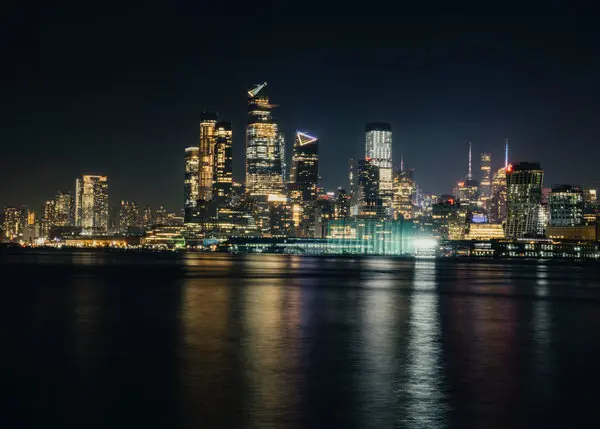
There is something about luxury in New York that refuses to feel overly precious. Paris can make luxury feel romantic, Milan can make it feel impossibly polished, and London can make it feel rebellious. New York does something different. It takes beautiful things, puts them in the middle of a city that is constantly moving, and somehow makes them feel cool. During New York Fashion Week, that contrast becomes impossible to miss. Old-school glamour walks into the same rooms as downtown energy, heritage fashion houses share the spotlight with emerging designers, and the city’s particular mix of ambition, attitude and unpredictability becomes part of the luxury experience itself.
That is exactly what makes New York Fashion Week so compelling this season. The Spring/Summer 2027 calendar, running officially from September 10 through September 15, brings roughly 70 runway shows and designer presentations to the city, while additional events and presentations stretch the fashion conversation beyond the official schedule. But the real story is not simply the number of designers participating. It is the collision of different versions of luxury happening at the same time.
New York has always understood that luxury does not have to whisper.
Sometimes it walks down the street in a beautifully cut coat.
Sometimes it arrives at The Plaza.
Sometimes it appears in a downtown gallery surrounded by concrete, cameras and people who look as though they have somewhere much more interesting to be.
And sometimes it is an impeccably tailored suit paired with an attitude that says absolutely nothing needs to be explained.
That ability to move between worlds is one of New York’s greatest fashion strengths.
This season’s return to American heritage brands makes that especially clear. Reuters noted that the September schedule is leaning into established American names that have managed to attract younger consumers, particularly Gen Z shoppers. That is an important detail because luxury has spent years wrestling with the question of how to remain desirable to younger audiences without losing the history that made a brand valuable in the first place.
New York’s answer seems to be: keep the history, change the attitude.
Ralph Lauren is perhaps the clearest example.
Few names are as closely associated with American luxury as Ralph Lauren, but the Spring 2027 collection demonstrated why the brand continues to feel relevant rather than frozen in nostalgia. Presented in downtown Manhattan, the collection drew on romance, American style and the designer’s personal relationship with his wife and longtime muse, Ricky Lauren. The show combined tailored pieces with sensual silhouettes, distressed denim, fringe, floral details and a relaxed attitude.
It was classic Ralph Lauren, but not necessarily the Ralph Lauren of a perfectly preserved country-club fantasy.
There was movement.
There was youth.
There was a little imperfection.
And that is where the cool factor comes in.
Luxury becomes interesting when it feels lived in.
A perfectly polished object can be beautiful, but New York has always preferred the beautiful object that looks as though somebody actually has somewhere to go in it.
That philosophy extends far beyond Ralph Lauren.
Coach’s presence this season offers another example of a heritage American brand using its history as a starting point rather than a finish line. The label is celebrating its 85th anniversary, but the Spring 2027 presentation has been positioned as a lively, contemporary fashion moment rather than a museum exhibition.
That distinction is increasingly important.
Today’s luxury customer does not necessarily want to feel as though she is buying into a history book. She wants the history, but she also wants relevance. She wants to understand why the brand mattered decades ago while still being able to imagine wearing it tomorrow.
New York is particularly good at that kind of translation.
The city is full of things that have survived because they know how to evolve.
Buildings get renovated without losing their character. Restaurants reinvent themselves while keeping the old name. Neighborhoods change completely and somehow retain traces of what they used to be. Fashion works the same way.
The city’s luxury culture is constantly being rewritten without completely erasing what came before.
That is why downtown matters.
Downtown New York has never represented luxury in the traditional sense. It has historically been associated with artists, musicians, nightlife, independent designers, galleries, creative communities and people who would rather establish a trend than follow one.
That energy gives New York fashion something that cannot be manufactured through branding alone.
It gives luxury friction.
A couture-inspired look might appear against a brick wall.
An expensive handbag might be carried through a crowded street.
A designer gown might show up at a restaurant where nobody is dressed remotely the same way.
The contrast makes the luxury more interesting.
And Fashion Week takes advantage of that contrast constantly.
The current calendar includes established houses such as Michael Kors, Carolina Herrera, Calvin Klein, Tory Burch, Khaite, Proenza Schouler and Thom Browne alongside newer and emerging names. The result is not one single definition of American luxury but dozens of them existing simultaneously.
Michael Kors can make glamour feel metropolitan.
Carolina Herrera can make elegance feel powerful.
Calvin Klein can strip fashion down until the silhouette itself becomes the statement.
Khaite can make understated dressing feel intensely desirable.
Thom Browne can take tailoring and turn it into something almost theatrical.
And emerging labels can challenge all of those assumptions entirely.
That diversity is part of New York’s luxury appeal.
The city does not require everyone to agree on what luxury should look like.
In fact, it seems to prefer disagreement.
That is why the newer designers entering the NYFW conversation are just as important as the famous names. The September schedule includes first-time participants and emerging labels bringing different cultural references, techniques and approaches into the official fashion ecosystem.
Among the brands attracting attention are Diotima, Heirlome, Fforme, Zankov, Kallmeyer and others that demonstrate how broad the contemporary New York fashion identity has become. Their work ranges from artisanal craftsmanship to architectural minimalism, sophisticated tailoring and highly individual approaches to materials and construction.
This is where luxury gets exciting again.
The future of luxury is not necessarily about making everything more expensive or more exclusive.
It is about making people care.
A beautifully constructed garment matters because someone can see the thought behind it. A distinctive handbag matters because it feels different from everything else. A designer matters because there is a point of view behind the clothes.
New York has always understood the value of point of view.
The city’s most successful fashion brands rarely feel anonymous.
They have personalities.
They have worlds.
They have people who want to belong to those worlds.
That is why New York can make luxury feel less intimidating and more aspirational at the same time.
You can admire the clothes without feeling as though you need to live inside a palace to understand them.
That is particularly important in an era when luxury is being discussed constantly online. Social media has made high fashion more visible than ever, but it has also made it easier for luxury to become repetitive. The same bags, the same logos, the same celebrity styling and the same carefully constructed images can circulate endlessly.
New York cuts through some of that sameness by adding unpredictability.
The city itself refuses to behave like a perfectly controlled brand environment.
Something unexpected is always happening.
A celebrity appears at a downtown show. A designer stages a presentation somewhere unusual. A heritage brand suddenly looks younger than expected. A new label gets everyone talking. A seemingly simple piece becomes the item everyone wants.
The atmosphere changes by the hour.
That is part of the luxury.
Even the social world surrounding Fashion Week contributes to the feeling. Vogue recently highlighted a Mytheresa gathering at the Hotel Chelsea that brought together European elegance and distinctly New York style, with Chloë Sevigny hosting in Saint Laurent. The event brought designers, fashion figures and celebrities together in a setting that felt as much like New York culture as it did luxury retail.
That combination is almost impossible to replicate elsewhere.
The luxury is there.
The glamour is there.
But there is also a sense of place.
New York fashion works because the city never disappears behind the clothes.
You can feel Manhattan in the tailoring.
You can feel downtown in the attitude.
You can feel American optimism in the sportswear.
You can feel decades of fashion history in the heritage houses.
And you can feel the future in the emerging designers trying to change the rules.
That makes New York particularly powerful at a time when the global luxury industry is searching for its next identity.
For years, luxury depended heavily on scarcity and heritage. Those remain important, but today’s customer also wants cultural relevance. She wants to know why something matters now. She wants craftsmanship, but she also wants personality. She wants an item that can be photographed beautifully but still feels like it belongs in her actual life.
New York understands that tension.
The city has never been particularly interested in perfection for perfection’s sake.
It prefers confidence.
It prefers character.
It prefers someone who can wear an extraordinary coat while walking quickly down a crowded sidewalk and make the whole thing look completely normal.
That is the New York version of luxury.
It is not necessarily about looking expensive.
It is about looking certain.
And that may be why American heritage brands are finding new energy among younger shoppers. The appeal is not simply nostalgia. It is the possibility of taking something familiar and making it personal. A classic jacket can become downtown. A traditional handbag can become playful. A tailored suit can become relaxed. An old-school silhouette can suddenly feel fresh when the person wearing it has a completely different attitude.
Fashion history becomes raw material.
New York knows how to work with raw material.
The same city that can preserve an iconic luxury name can also produce a designer nobody has heard of yet who suddenly makes everyone question what they thought luxury was supposed to be.
That tension is what keeps the city relevant.
New York does not need to compete with Paris by becoming Paris.
It does not need to imitate Milan.
It does not need to recreate London.
Its strength is that it feels unmistakably like itself.
Fast.
Ambitious.
Creative.
A little chaotic.
Very confident.
And surprisingly romantic when it wants to be.
That last part may be the biggest story of this Fashion Week.
Because beneath all the talk about trends, brands, celebrities and business, luxury still depends on emotion.
People want beautiful things because beautiful things can make ordinary life feel different.
A coat can change how someone walks.
A watch can become part of a family story.
A handbag can mark a milestone.
A dress can become the memory of an entire evening.
New York understands that luxury is ultimately about how an object makes someone feel.
The city simply adds its own personality to the equation.
This is why New York still knows how to make luxury feel cool.
It does not treat luxury as something that belongs behind glass.
It puts it on the street.
It mixes it with music, art, food, nightlife, architecture, celebrity and everyday life.
It lets old-school glamour meet downtown attitude.
And when those two worlds collide, something happens that is difficult to manufacture anywhere else.
Luxury stops feeling distant.
It starts feeling alive.
References
Vogue — New York Fashion Week Spring 2027 Preview
Reuters — New York Fashion Week Leans Into American Legacy Brand Revival
The Times — New York Fashion Week 2026 Show Highlights
AP — Ralph Lauren Presents a Modern Take on Romance at NYFW