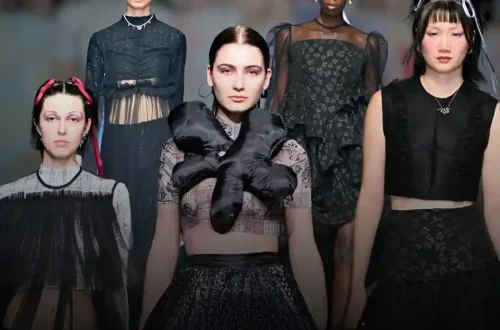
The Met Gala has always been one of fashion’s biggest cultural events, but the conversation surrounding the 2027 celebration has already become controversial months before celebrities are expected to walk the red carpet. The Metropolitan Museum of Art’s decision to dedicate its next Costume Institute exhibition to British designer John Galliano has sparked growing criticism, raising difficult questions about artistic achievement, accountability, forgiveness, and who deserves to be celebrated by one of the world’s most prestigious fashion institutions.
The upcoming exhibition, titled “John Galliano: Horizons,” will examine more than four decades of the designer’s career, from his early work at Central Saint Martins to his influential periods at Givenchy, Christian Dior, his own label, and Maison Margiela. The exhibition is scheduled to open at The Met Fifth Avenue on May 9, 2027, and remain on view through January 9, 2028.
The controversy comes from Galliano’s well-documented history. In 2011, he was dismissed from Dior after videos surfaced showing him making racist and antisemitic remarks in Paris. He was subsequently convicted by a French court of public insults based on race, religion, ethnicity, or origin. More than a decade later, Galliano has apologized for his behavior, undergone treatment for addiction, and rebuilt a major career in fashion.
For supporters of the exhibition, Galliano’s work represents an important chapter in modern fashion history that deserves serious academic examination. For critics, however, giving him such a prominent platform risks turning artistic recognition into a form of celebration and raises concerns about whether his past conduct can ever be separated from his professional achievements.
The debate surrounding the 2027 Met Gala is therefore about more than one designer. It reflects a much larger conversation about how fashion should remember controversial figures in an era when cultural institutions are being asked to consider ethics alongside artistic influence.
Why John Galliano Is Such an Important Fashion Figure
To understand why the Met chose Galliano, it is necessary to understand the extraordinary influence he has had on fashion.
Galliano emerged as a major creative force after graduating from Central Saint Martins in London in 1984. His graduate collection, “Les Incroyables,” immediately attracted attention and was purchased by the influential London boutique Browns. His early work established many of the qualities that would become associated with his name: theatrical storytelling, historical references, dramatic silhouettes, intricate craftsmanship, and a willingness to transform fashion into spectacle.
His career eventually brought him to Paris, where he became head designer at Givenchy in 1995. In 1996, he was appointed creative director of Christian Dior, a position that turned him into one of the most influential designers of his generation.
During his time at Dior, Galliano became known for collections that blended historical research with fantasy and theatrical presentation. His designs often drew inspiration from different cultures, periods of history, literature, film, and performance.
The result was fashion that was rarely quiet.
Galliano created dramatic gowns, elaborate embroidery, exaggerated silhouettes, corsetry, intricate tailoring, and highly recognizable accessories. His work helped reinforce the idea that a fashion collection could be more than a series of clothes. It could tell a story and construct an entire imaginary world.
The Met itself describes him as one of the most inventive and influential designers of the past four decades. Its forthcoming exhibition will include garments, accessories, sketches, toiles, research books, and archival materials spanning his career.
The 2011 Scandal That Changed Galliano’s Career
The biggest reason for the current backlash is not his fashion legacy but what happened in 2011.
Galliano’s career dramatically collapsed after videos emerged showing him making racist and antisemitic comments at a Paris café. The incident led to his dismissal from Dior and caused him to become one of fashion’s most controversial figures.
A French court later convicted him over the remarks and imposed a suspended fine. The incident effectively ended his position at Dior and forced him away from the center of the fashion industry.
The consequences were significant. Galliano disappeared from public fashion life for a period before beginning a gradual process of rehabilitation. He later spoke about his addiction to alcohol and drugs and acknowledged the seriousness of his behavior.
His return to fashion was not immediate or simple. But over time, he began working again, eventually becoming creative director of Maison Margiela in 2014.
His tenure at Maison Margiela became an important part of the second chapter of his career. Rather than simply reproducing the extravagant style associated with his Dior years, Galliano explored deconstruction, craftsmanship, unconventional materials, and experimental approaches to fashion.
His spring 2024 Maison Margiela Artisanal collection was particularly influential, reinforcing his reputation for technical innovation and theatrical storytelling.
This complicated history is precisely why the Met exhibition has generated so much discussion.
Why the Met Gala Tribute Is Causing Backlash
The criticism surrounding “John Galliano: Horizons” is largely focused on the difference between examining a controversial figure and honoring that person.
The Met has enormous cultural influence. Being the subject of a major Costume Institute exhibition is not an ordinary fashion achievement. Galliano will become only the third living designer to receive a solo exhibition from the Costume Institute, following Yves Saint Laurent in 1983 and Rei Kawakubo of Comme des Garçons in 2017.
That distinction makes the decision particularly significant.
Critics argue that giving Galliano such an important platform could be interpreted as elevating him to the highest level of fashion recognition despite his history of antisemitic and racist conduct.
The controversy has become even more intense because the exhibition and Met Gala will place his name at the center of fashion culture. The 2027 Met Gala is scheduled for May 3, 2027, with the exhibition opening several days later.
Recent criticism has included calls for the museum to reconsider its decision. New York City Council Speaker Julie Menin has described the decision as a serious mistake, while Jewish organizations and commentators have continued to debate whether Galliano’s subsequent apologies and efforts at rehabilitation justify such a prominent honor.
The issue is especially sensitive because antisemitism remains an ongoing concern internationally. For critics, that makes the timing of a major public celebration of Galliano’s legacy particularly difficult.
The Met Says the Exhibition Will Not Ignore His Past
The Metropolitan Museum of Art has anticipated some of these concerns.
According to the museum’s official announcement, the exhibition will not simply present Galliano’s career as a straightforward story of genius followed by redemption. Instead, the Costume Institute says the exhibition will directly address the conduct that changed his career and public reputation.
The first section of the exhibition, titled “Bearings,” will examine Galliano’s career alongside broader historical and cultural events. It will specifically address his antisemitic, racist, and anti-Asian conduct in 2010 and 2011, his dismissal from Dior and his own label, his conviction, his treatment for substance addiction, and his later acknowledgment of his actions.
This distinction is important.
The Met is arguing that the exhibition is not intended to erase or excuse what happened. Instead, the museum wants visitors to examine how artistic achievement and ethical accountability can exist within the same historical narrative.
That approach creates an interesting question for museums: Can an institution honor someone’s creative contribution while still presenting a critical examination of their harmful behavior?
The Met appears to believe it can.
Can Art Be Separated From the Artist?
The Galliano controversy brings one of fashion’s oldest debates back into the spotlight: Should extraordinary creative work be judged separately from the personal behavior of the person who created it?
There is no simple answer.
Fashion history is filled with designers whose creative achievements exist alongside complicated personal histories. Museums routinely display work created by people who lived according to values that may be deeply uncomfortable or unacceptable today.
But there is a difference between preserving historical work and actively celebrating its creator.
That difference is at the heart of the current debate.
An exhibition can provide historical context, explain influence, acknowledge harm, and allow visitors to form their own conclusions. However, when an institution dedicates an entire exhibition to a living designer, the event can naturally be interpreted as recognition.
This is why the language used by the Met matters.
The museum emphasizes that Galliano’s conduct will be included in the exhibition rather than hidden. The question is whether that acknowledgment will be enough for critics who believe that certain actions should permanently limit the level of public honor an individual receives.
Galliano’s Fashion Legacy Remains Difficult to Ignore
Even critics of the Met’s decision generally cannot erase Galliano’s influence on fashion history.
His work changed how designers approached storytelling, theatrical presentation, historical references, and craftsmanship. His collections frequently transformed the runway into a performance, creating a world around the clothing rather than simply presenting individual garments.
His influence also extends across generations of designers and fashion consumers.
Some of the most recognizable Galliano designs from the Dior era have returned to popular culture through archival fashion. Vintage Galliano pieces have become increasingly sought after, while celebrities have revisited his designs for major appearances.
His creative influence is particularly visible in the renewed interest in archival fashion. As celebrities and stylists increasingly search fashion history for distinctive red-carpet pieces, Galliano’s most memorable designs have found new relevance.
This makes the Met’s decision understandable from an academic and fashion-history perspective, even if it remains controversial from an ethical one.
Why the Exhibition Could Become One of the Met’s Most Discussed Fashion Shows
Regardless of where people stand on the controversy, “John Galliano: Horizons” is likely to generate enormous attention.
The exhibition will cover more than four decades of fashion history and will feature garments, accessories, research materials, sketches, and other archival pieces. The Met says the exhibition will be divided into three movements: “Bearings,” “Horizons,” and “Atlas of Transformation.”
“Bearings” will establish the historical context of Galliano’s career and confront the controversies that changed his public image.
“Horizons” will explore the recurring sources of inspiration behind his collections, including history, geography, art, storytelling, and performance.
“Atlas of Transformation” will examine his creative process, showing how research, sketches, fittings, and technical development ultimately become finished garments.
This structure could make the exhibition more complicated and potentially more interesting than a traditional retrospective.
Instead of simply asking visitors to admire Galliano’s clothes, the exhibition is designed to ask how those clothes were created, how they were received, and how the designer’s personal history has affected the way audiences understand his work.
Fashion Is Also About Memory
One of the most interesting aspects of the Galliano debate is the role of memory.
Fashion changes quickly. Designers who dominate one decade can become forgotten in another. Trends disappear, brands change direction, and cultural attitudes evolve.
Yet fashion also has an unusually strong relationship with nostalgia.
A dress from the 1990s can suddenly feel modern again. An old handbag can become a social media sensation. A forgotten runway collection can influence a new generation of designers.
Galliano’s return to the fashion conversation demonstrates how quickly cultural memory can change.
For some people, his 2011 scandal remains the defining part of his public identity. For others, his years of work before and after the incident have become equally important to understanding his career.
The Met exhibition will force those competing versions of Galliano’s legacy into the same room.
The Growing Importance of Accountability in Fashion
The fashion industry has changed considerably since 2011.
Today, consumers are more willing to question the behavior of designers, executives, celebrities, and brands. Social media has made it much harder for controversies to disappear quietly.
Luxury fashion is also increasingly expected to consider issues beyond aesthetics, including diversity, representation, workplace culture, sustainability, and ethical responsibility.
That means fashion institutions cannot simply present creative achievements without considering the broader context surrounding them.
The Galliano exhibition is therefore arriving at an important moment.
It asks whether accountability means permanent exclusion or whether genuine acknowledgment, apology, personal change, and sustained efforts to repair harm can eventually become part of a person’s historical legacy.
Different people will answer that question differently.
Luxury Fashion Is Also About Personal Well-Being
The discussion around fashion often focuses on clothing, beauty, celebrity culture, and luxury brands, but modern fashion lifestyles increasingly overlap with wellness.
The fashion industry can be demanding. Designers, models, stylists, editors, photographers, and other professionals frequently work under intense schedules, travel across time zones, and spend long hours preparing for major events.
That makes rest and recovery an increasingly relevant part of a modern luxury lifestyle.
Quality sleep, in particular, can play an important role in maintaining energy and focus. Whether someone is traveling for Fashion Week, preparing for a major event, or simply trying to create a more comfortable nighttime routine, sleep health can complement a fashion-focused lifestyle.
For readers interested in exploring products designed around sleep and wellness, the Ragers Sleep & Health Collection can be included as part of a broader self-care routine.
Luxury today is increasingly defined not only by what we wear or where we travel, but also by how intentionally we take care of ourselves.
What the Met Gala 2027 Could Look Like
The Met Gala is famous for transforming fashion history into a highly visual celebrity event, so the Galliano theme could produce some of the most dramatic red-carpet looks in years.
Galliano’s archive provides an enormous amount of inspiration.
Celebrities could revisit his Dior couture, reinterpret his dramatic historical references, draw from his Maison Margiela period, or work with designers to create modern interpretations of his distinctive approach to fashion.
The potential looks are almost impossible to predict, but one thing is certain: the fashion choices will be closely examined.
Every outfit connected to Galliano’s legacy may carry a second layer of meaning. Is it celebrating his creativity? Is it engaging with the controversy? Is it simply referencing an iconic garment?
That complexity could make the 2027 Met Gala particularly fascinating.
A Fashion Controversy That Is Bigger Than One Designer
The backlash surrounding John Galliano’s planned Met Gala tribute is unlikely to disappear quickly.
At its core, the controversy is about more than whether Galliano is a brilliant designer. His creative influence is well documented. The harder question is what institutions should do with artists whose work is historically significant but whose behavior has caused serious harm.
The Metropolitan Museum of Art has chosen to confront that tension rather than avoid it.
“John Galliano: Horizons” will attempt to tell the full story: the early promise, the extraordinary rise, the devastating fall, the years away from the spotlight, the return to fashion, and the continuing debate over how his work should be understood.
Whether audiences believe that approach is appropriate remains another matter.
Final Thoughts
The growing backlash over the Met Gala’s decision to honor John Galliano highlights one of the biggest challenges facing fashion today: how to celebrate creativity while taking ethical accountability seriously.
Galliano’s influence on modern fashion is undeniable, but so is the controversy surrounding his past.
The Met’s decision to dedicate a major Costume Institute exhibition to him has forced the industry to confront an uncomfortable question. Can a designer’s artistic legacy be examined without turning that examination into an endorsement?
The answer may ultimately depend on how the exhibition handles the balance between admiration and accountability.
If “John Galliano: Horizons” genuinely presents the complexity of his career, including the harm caused by his actions and the consequences that followed, it could become more than a celebration of fashion. It could become a case study in how museums, designers, and audiences deal with complicated legacies.
The exhibition is scheduled to open at The Met Fifth Avenue on May 9, 2027, following the Met Gala on May 3.
Until then, the debate is likely to continue.
And perhaps that is precisely why the controversy surrounding John Galliano has become such an important fashion story. Fashion has always been about more than clothing. It reflects culture, identity, history, creativity, power, and changing social values. The Galliano debate shows that the industry is now being asked to examine all of those things at once.
Sources and further reading
- The Metropolitan Museum of Art — John Galliano: Horizons — Official exhibition information, dates, structure, and curatorial approach.
- The Metropolitan Museum of Art — Official Press Release — The Met’s announcement and explanation of how the exhibition will address Galliano’s controversial conduct.
- Vogue — John Galliano Is the Subject of the Next Costume Institute Show — Background on Galliano’s fashion career and the 2027 Costume Institute exhibition.
- The Star — Backlash grows over the Met Gala’s plan to honour John Galliano — Recent reporting on the growing backlash surrounding the Met’s decision.
- RTÉ — Met Gala 2027 will honour controversial designer John Galliano — Background on Galliano’s career, controversy, and rehabilitation.
- The Guardian — Designer John Galliano to get unvarnished Met retrospective in May — Analysis of the retrospective and Galliano’s complicated fashion legacy.
- Ragers Sleep & Health Collection — Product feature included in the article for readers interested in sleep and wellness.