If you thought the “sad beige” era was a passing fad, the first quarter of 2026 has a reality check for you. Despite a loud, neon-soaked push for “Maximalism” on the runways, Quiet Luxury remains the undefeated heavyweight champion of the cultural zeitgeist.
We have moved beyond a mere fashion trend into a full-scale lifestyle philosophy. In a world of digital noise and economic volatility, the loudest thing you can do is whisper. Logos are losing their grip on the aspirational crown, and in their place, pure taste has become the ultimate currency. Here is why the “Quiet” movement is still owning the room in 2026.
The Death of the Digital Billboard
For the better part of a decade, luxury was synonymous with visibility. If people couldn’t see the monogram from across the street, did you even buy it? But in 2026, Logomania has entered its “cringe” phase.
- The “Post-Status” Status: The modern elite are pivoting away from overt branding. We are seeing a massive shift toward brands like The Row, Loro Piana, and Toteme—labels that emphasize architectural lines and exceptional fabrics over a recognizable name.
- The Code of the “In-Know”: Status is now signaled through knowledge, not volume. It’s about recognizing the specific weight of a double-faced cashmere coat or the subtle “Cloud Dancer” off-white shade that has been dubbed the color of the year. If you have to ask what brand it is, you aren’t the target audience. That exclusivity-through-discretion is the most powerful gatekeeping tool in modern culture.
From “Quiet Luxury” to “Quiet Living”
In 2026, the philosophy has leaked out of the closet and into every other aspect of our lives. We’ve graduated from wearing quiet clothes to practicing Quiet Living.
- The Bathroom Shelf Reset: The “Shelfie” is no longer a collection of brightly colored, hyped-up products. It’s been replaced by performance-first, minimal-aesthetic brands like Augustinus Bader and Westman Atelier. The goal is a high-functioning, low-clutter environment that prioritizes the health of the skin barrier over the prestige of the packaging.
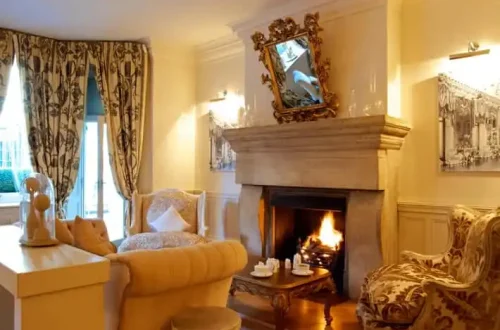
- Interior Restraint: Home design has followed suit. We are seeing a move away from “glossy” surfaces and toward warm minimalism. Natural materials like light travertine, honed limestone, and hand-loomed wool are the new hallmarks of luxury. A home that feels “grounded” and “serene” is the ultimate 2026 flex.
Sustainability as a Moral Status Symbol
The dominance of Quiet Luxury is also a reaction to the environmental guilt of the “Fast Fashion” era. In 2026, longevity is the new sustainability.
Consumers are increasingly rejecting the “buy-react-dispose” cycle. Quiet Luxury aligns perfectly with the “Buy Less, Choose Well” mantra. An impeccably tailored wool blazer that lasts ten years is seen as a far more intelligent investment than a dozen “viral” pieces that fall apart in six months. This shift toward Heritage Tailoring and ethically sourced natural fibers isn’t just a style choice; it’s a moral statement about one’s relationship with consumption.
The Power of “Presence” Over “Performance”
Ultimately, Quiet Luxury still dominates because it allows for Presence. In a culture driven by constant reaction and performative behavior, there is a deep, collective yearning for something that feels permanent.
Quiet Luxury doesn’t demand attention; it earns it through restraint. It speaks to a level of self-assurance where the wearer doesn’t need to prove their worth through a price tag on their chest. As we navigate the complexities of 2026, the most desirable luxury isn’t a logo—it’s the calm, controlled, and intelligent aura of someone who knows exactly who they are, without saying a word.